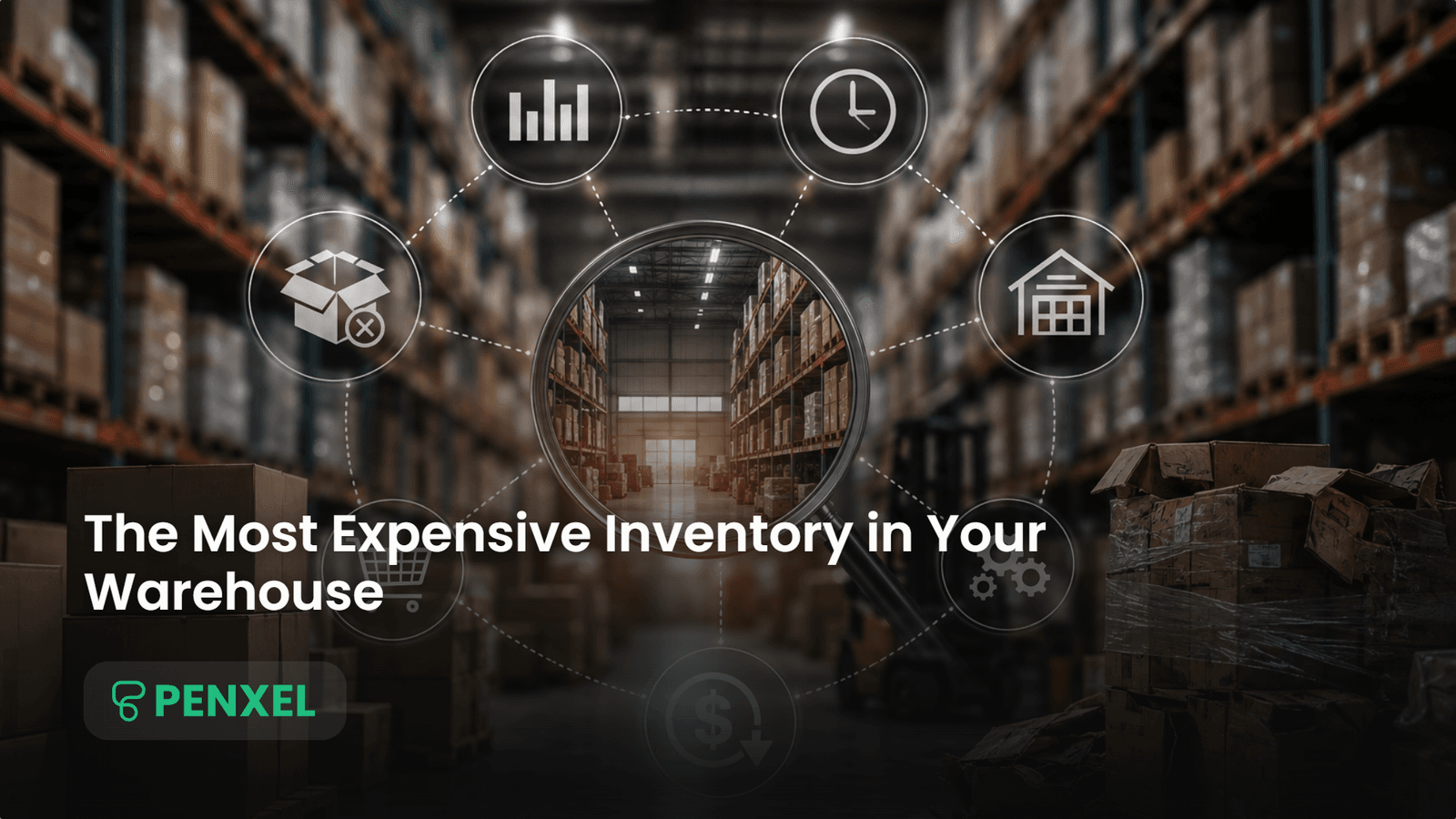
When you think about the most expensive inventory in your warehouse, your mind likely jumps to high-value items: specialized electronics, designer apparel, or precious raw materials. While these certainly represent significant capital investment, the true "most expensive inventory" often isn't found on a price tag. It's the hidden, intangible costs that silently erode your bottom line.
Beyond the Sticker Price: Understanding True Inventory Cost#
The initial purchase price of goods is just one component of their overall expense. A comprehensive view of inventory cost must include carrying costs, which accumulate over time. These are the expenses incurred for holding inventory before it's sold or used.
Consider these elements of carrying cost:
Storage Costs: Rent or depreciation of warehouse space, utilities, security, and maintenance. Every square foot occupied by inventory has a cost.
Capital Costs: The money tied up in inventory could be invested elsewhere. This represents an opportunity cost – the profit you miss by not using that capital for other ventures.
Risk Costs: This includes insurance premiums, shrinkage (theft, damage, spoilage), and perhaps most significantly, obsolescence. Technology components, fashion items, or perishable goods can quickly lose value if not moved efficiently.
Service Costs: Taxes on inventory and the administrative effort involved in managing it (staff wages, software licenses).
A high-value item sitting for too long can quickly become more expensive than a lower-value item that moves quickly, due to these compounding carrying costs.
The Silent Drain: Hidden "Expensive Inventory"#
Beyond the physical goods and their carrying costs, several less obvious "inventories" can be the most expensive assets in your warehouse if not managed correctly.
Obsolete and Slow-Moving Stock#
This is perhaps the most classic example of truly expensive inventory. These are goods that have little to no demand, have become outdated, or are nearing their expiration date. They occupy valuable space, tie up capital indefinitely, and often require further expense for disposal. Imagine a warehouse stocked with components for a discontinued product line – each piece represents not just its purchase price, but also the ongoing cost of the space it occupies and the capital it prevents from being reinvested.
Inefficient Processes and Poor Layout#
Time and labor are precious commodities. When warehouse processes are inefficient, or the layout is poorly optimized, you're accumulating "inventory" of wasted time and motion. This includes:
Excessive Travel Time: Pickers walking long, disorganized routes to fulfill orders.
Manual Data Entry Errors: Leading to mispicks, incorrect shipments, and costly returns.
Redundant Steps: Multiple checks or handling points that don't add value.
Every minute spent on an unnecessary task or movement is a minute of paid labor that doesn't contribute to productivity, effectively making your operational workflow an expensive, inefficient "inventory."
Untapped Data and Outdated Systems#
In the digital age, data is a critical asset. If your warehouse operates with outdated inventory management systems (IMS) or warehouse management systems (WMS), or if you collect data but fail to analyze it, you're sitting on expensive, underutilized "information inventory." Without real-time insights into stock levels, demand patterns, or picker performance, decisions are made in the dark, leading to:
Overstocking: Based on guesswork rather than accurate demand forecasts.
Stockouts: Due to lack of visibility into current inventory.
Missed Opportunities: To optimize space, labor, or purchasing.
The cost isn't just the system's purchase price; it's the ongoing financial impact of suboptimal decision-making.
Untrained or Underutilized Labor#
Your workforce is a significant investment. When employees lack proper training, are assigned tasks below their skill level, or are not empowered to contribute to process improvements, you're carrying an expensive "inventory" of untapped potential. High turnover rates, often a symptom of poor training or management, also contribute significantly. The cost of recruiting, hiring, and training new staff repeatedly is a massive drain that could be mitigated by investing in your existing team.
Strategies to Reduce Your "Expensive Inventory"#
Proactively managing these hidden costs is crucial for profitability and operational efficiency.
1. Implement Robust Inventory Management Systems (IMS/WMS)#
Invest in modern systems that offer real-time tracking, accurate demand forecasting, and robust reporting. This visibility helps identify slow-moving items, optimize stock levels, and reduce manual errors.
2. Optimize Warehouse Layout and Workflow#
Regularly review and redesign your warehouse layout to minimize travel time and streamline picking paths. Implement lean principles to eliminate waste, such as cross-docking for fast-moving items or dedicated zones for specific product types.
3. Embrace Data Analytics#
Leverage the data from your IMS/WMS. Analyze sales trends, seasonality, and supplier lead times to make informed purchasing decisions. Predictive analytics can significantly reduce the risk of overstocking or stockouts.
4. Invest in Continuous Training and Automation#
Equip your team with the skills and tools they need to perform effectively. Training on new technologies or best practices can boost productivity and reduce errors. Consider automation for repetitive tasks, freeing up staff for more complex, value-added activities.
5. Regular Audits and Cycle Counting#
Don't wait for annual inventory counts. Implement regular cycle counting to identify discrepancies early, maintain accurate stock records, and prevent costly losses due to shrinkage or misplacement.
6. Foster Strong Supplier Relationships#
Collaborate closely with your suppliers to improve lead times, reduce minimum order quantities, and explore consignment inventory options. Better supplier relationships can significantly reduce the need for large safety stocks.
The true cost of inventory extends far beyond its initial purchase price. By recognizing and actively managing the hidden "expensive inventory" in obsolete stock, inefficient processes, untapped data, and underutilized labor, businesses can unlock significant savings and drive greater operational efficiency. It's a strategic shift from simply counting goods to truly optimizing every aspect of your warehouse operation.