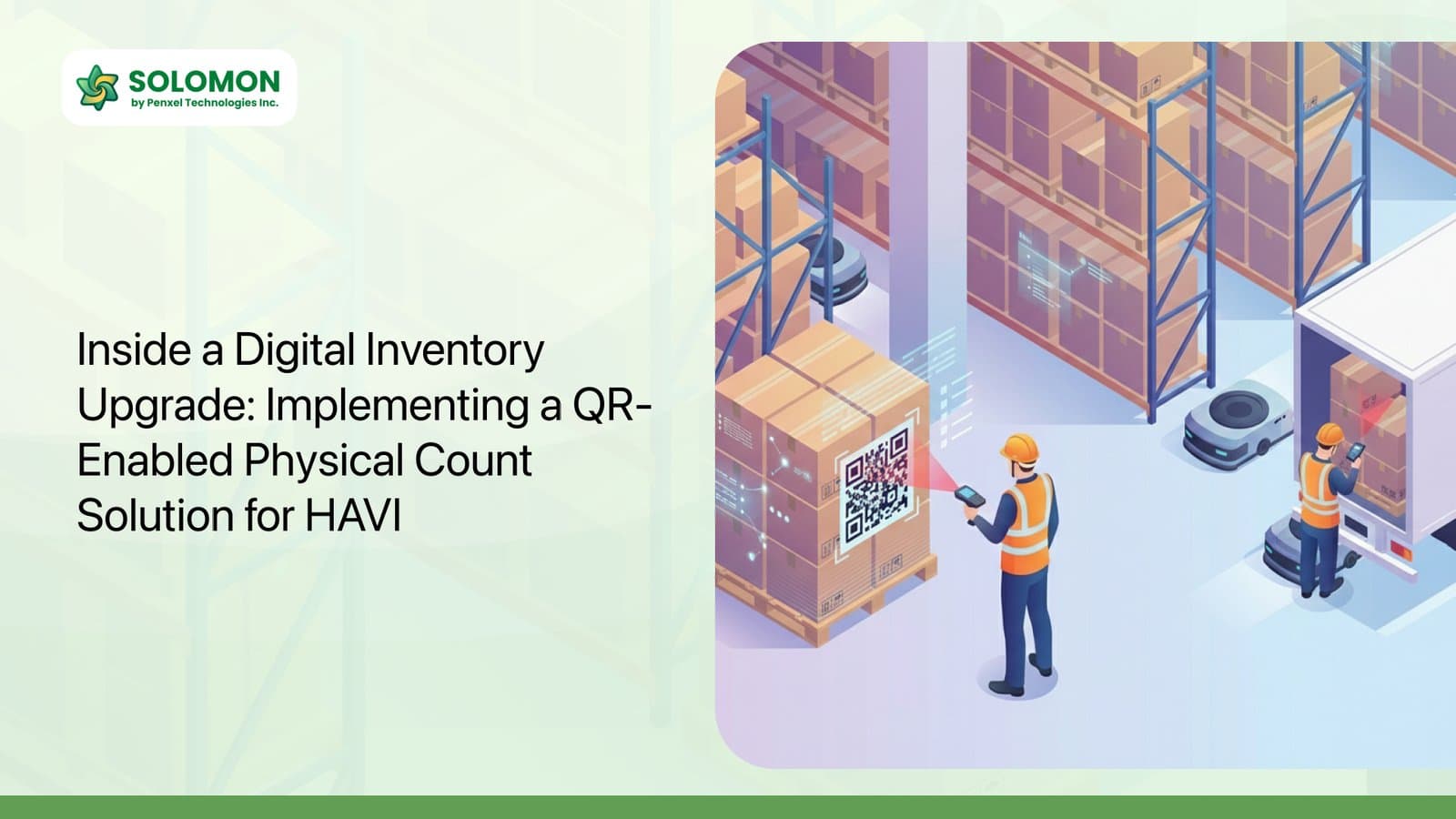
Overview
HAVI stands as a major logistics and supply-chain partner in the foodservice sector, operating extensive warehouse and distribution networks where precision is essential. Several years ago, HAVI pursued a digital upgrade to modernize how physical inventory counts were performed and to streamline how warehouse data aligned with the externally managed WMS used by one of its key partners.
This case study revisits that implementation—highlighting how a QR-enabled inventory counting solution replaced manual processes, strengthened data integrity, and improved synchronization between physical operations and upstream WMS data.
The Challenge
Prior to modernization, physical inventory counts relied heavily on manual checking and spreadsheet consolidation. This approach became increasingly difficult as stock volumes, turnover rates, and operational demands grew.
Challenges included:
- Slow, manual inventory counting
- High risk of transcription and encoding errors
- Difficulty reconciling counts against external WMS exports
- Limited visibility into discrepancies until after review
- Lack of standardized processes across warehouse teams
HAVI needed a dependable, software-driven workflow that could accelerate count cycles and create a reliable bridge between on-floor activities and the partner’s WMS.
The Solution
A QR-Enabled Physical Count System
A custom inventory-counting software solution was introduced to bring structure, accuracy, and efficiency to warehouse operations.

Key features included:
- QR-Based Identification
- Each stock item or container carried a QR code. Scanning linked the physical item to its corresponding entry, reducing misidentification and ensuring a consistent data trail.
- Guided Counting Process
- The software provided a streamlined scan-confirm-submit workflow, minimizing errors and improving staff throughput.
- Session-Based Data Capture
- Counting sessions were stored locally and synced once completed, allowing uninterrupted operations even in areas with limited connectivity.
- Controlled Device Deployment
- The system ran only on approved devices to maintain consistency, prevent unauthorized usage, and protect data quality.
Secure Integration With External WMS
Because HAVI’s upstream inventory data originated from a partner-managed WMS, the integration strategy focused on reliability and compatibility rather than direct system-to-system APIs.
- The partner WMS exported inventory and pick-list data.
- The count software used these exports as reference.
- Completed count sessions generated structured output files.
- These files were transferred through a controlled FTP process.
- HAVI systems ingested the files, reconciled the data, and flagged discrepancies.
This method created a dependable synchronization loop that aligned physical counts with external WMS information.

Implementation Highlights
Unified Counting Workflow
Teams across the facility adopted a consistent process, resulting in more reliable data and fewer operational variations.
Re-Reading for Pick-List Validation
The system supported re-reading QR codes to validate pick lists or pre-dispatch checks, reinforcing accuracy during outbound operations.
Full Audit Logging
Every scan, submission, and adjustment was logged, strengthening traceability and improving operational accountability.
Adaptable for Multiple Locations
The system was designed so additional warehouses could adopt the same process without needing major redevelopment.
Results & Impact
The completed implementation delivered clear operational improvements:
- Significantly faster count cycles compared to manual tracking
- Higher accuracy due to QR-based scanning and standardized workflows
- More reliable warehouse-to-WMS synchronization
- Reduced administrative work previously spent on manual consolidation
- Better transparency through automated audit trails
These gains improved inventory reliability across the distribution chain and reduced friction during reconciliation with external partners.

Strategic Value & Future Opportunity
This project laid the groundwork for HAVI’s broader shift toward more digitally integrated warehouse operations. The success of the solution demonstrated the value of:
- Structured software-driven inventory processes
- QR-based accuracy in high-volume environments
- Secure data exchange mechanisms when working with external WMS platforms
As HAVI continues enhancing its digital capabilities, opportunities exist to extend the system with real-time synchronization, automated exception alerts, advanced analytics, and expanded use of scan-based validation across inbound and outbound workflows.
This earlier implementation remains a strong example of how focused digital upgrades can elevate operational precision and set the stage for more advanced supply-chain transformation.