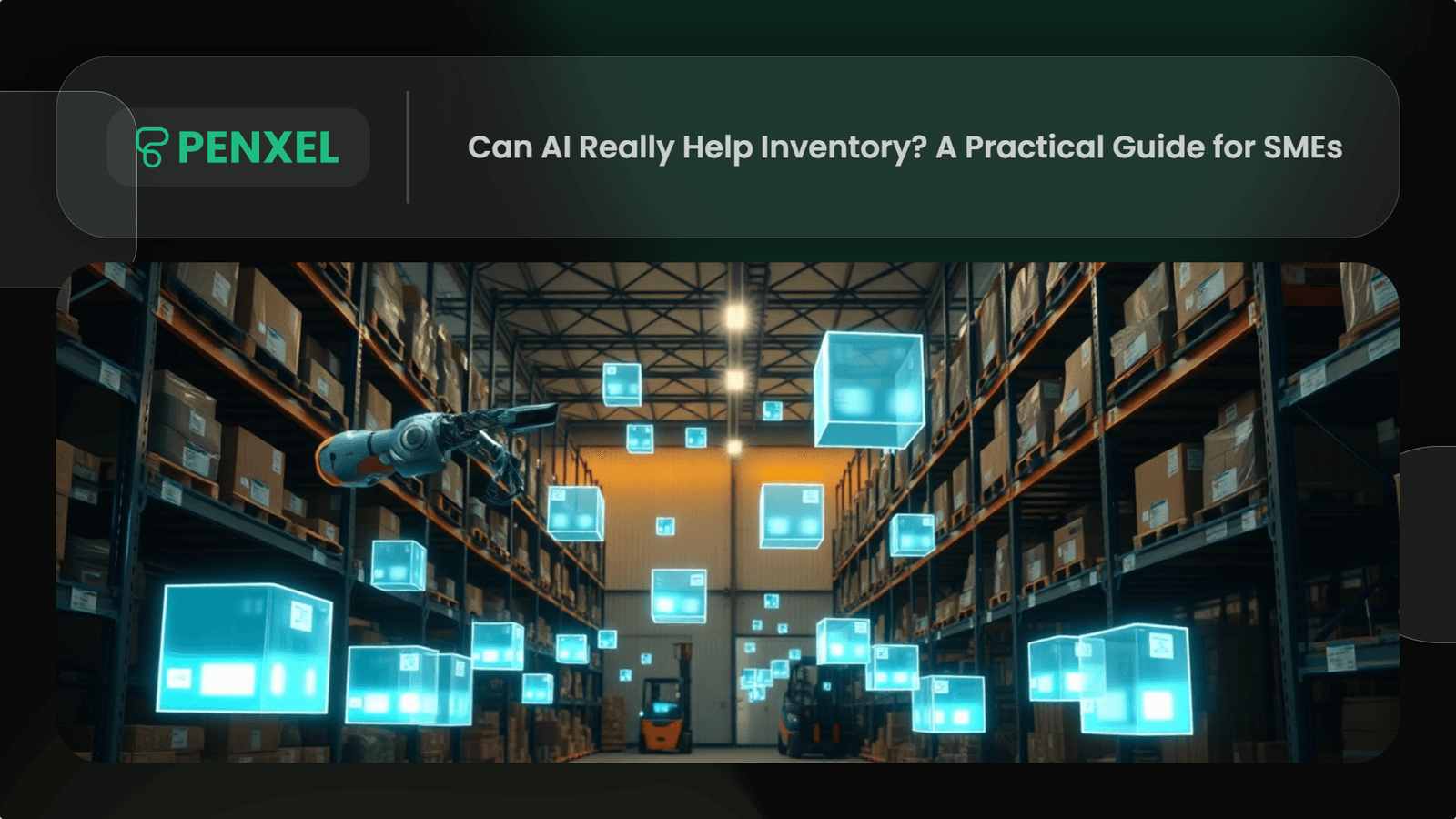
For many small and medium enterprises (SMEs), inventory management feels like a constant balancing act. Too much stock ties up capital and risks obsolescence; too little leads to lost sales and unhappy customers. In an increasingly competitive landscape, the efficiency of your inventory directly impacts profitability and customer satisfaction. The good news? Artificial intelligence (AI), once seen as the exclusive domain of large corporations, is now offering practical, accessible solutions that can fundamentally transform how SMEs manage their stock.
What is AI in Inventory Management?#
At its core, AI in inventory management refers to the use of advanced algorithms and machine learning techniques to automate, optimize, and provide insights into stock levels, demand patterns, and supply chain operations. It moves beyond traditional rule-based systems, learning from vast amounts of data to make predictions and recommendations with a level of accuracy and speed impossible for human analysis alone.
For SMEs, this isn't about replacing human judgment entirely, but rather augmenting it. AI tools can analyze historical sales data, seasonal trends, marketing promotions, supplier lead times, and even external factors like weather forecasts or economic indicators. This comprehensive analysis allows businesses to make more informed decisions, reduce guesswork, and react proactively to market changes.
Why SMEs Struggle with Traditional Inventory Management#
Before diving into AI's solutions, it's crucial to understand the common pain points that plague SMEs using traditional or manual inventory methods:
Inaccurate Demand Forecasting#
Many SMEs rely on intuition or simple historical averages, leading to frequent stockouts or overstock situations. Without sophisticated tools, predicting future demand, especially for products with fluctuating popularity or seasonal variations, is a significant challenge.
Manual Data Entry and Human Error#
Spreadsheets and manual tracking are prone to mistakes. A single misplaced digit can ripple through the entire inventory system, causing discrepancies between physical stock and recorded figures, leading to costly errors in ordering and fulfillment.
Suboptimal Stock Levels#
Striking the right balance between carrying costs (storage, insurance, obsolescence) and the risk of stockouts is complex. Many SMEs either hold too much safety stock "just in case," or operate with dangerously low levels, missing sales opportunities.
Inefficient Warehouse Operations#
Without data-driven insights, warehouse layouts, picking routes, and stock placement might be inefficient. This leads to wasted time, increased labor costs, and slower order fulfillment.
Lack of Real-Time Visibility#
Traditional systems often provide only a snapshot of inventory at a given time, making it difficult to react quickly to unexpected demand spikes, supply chain disruptions, or sudden shifts in customer preferences.
Key AI Applications for SME Inventory#
AI offers a suite of tools that directly address these challenges, providing tangible benefits even for businesses with limited resources.
1. Advanced Demand Forecasting#
This is arguably the most impactful application for SMEs. AI algorithms can analyze years of sales data, identifying patterns, trends, and correlations that human analysts might miss. They can factor in:
Seasonality: Predicting peaks and troughs for seasonal products (e.g., holiday items, summer wear).
Promotional Impact: Understanding how specific marketing campaigns affect demand.
External Factors: Integrating data like local events, weather patterns, or even social media sentiment to refine predictions.
Product Lifecycle: Forecasting demand for new product launches or products nearing end-of-life.
Practical Example: A small online boutique selling artisanal jewelry historically struggled to predict demand for unique, handcrafted pieces, leading to either long wait times or excess unsold stock. Implementing an AI-powered forecasting tool allowed them to analyze past sales, website traffic, social media engagement, and even local event schedules. The AI accurately predicted spikes in demand for certain styles around specific holidays or local craft fairs, enabling the boutique to adjust production and ordering proactively, reducing both stockouts and surplus.
2. Automated Reordering and Stock Optimization#
Based on precise demand forecasts, AI can automate the reordering process. Instead of relying on static reorder points, AI systems can dynamically adjust optimal stock levels and reorder quantities by considering:
Supplier Lead Times: Accounting for variations in delivery schedules.
Minimum Order Quantities (MOQs): Ensuring orders meet supplier requirements.
Holding Costs: Balancing the cost of storing inventory against potential stockout costs.
Sales Velocity: Prioritizing fast-moving items while flagging slow-movers.
Practical Example: A small hardware store often ran out of popular tools or had shelves full of slow-moving items. An AI system integrated with their point-of-sale data began to automatically generate purchase orders for high-demand items when stock levels hit a dynamically calculated reorder point. For slow-moving inventory, it recommended strategic markdowns or bundling to clear space, freeing up capital that would otherwise be tied up.
3. Warehouse Layout and Picking Path Optimization#
While full-scale robotics might be out of reach for most SMEs, AI can still significantly optimize internal warehouse operations through software. AI-driven systems can analyze product movement data to:
Optimize Slotting: Suggest the best locations for products based on their picking frequency, size, and weight, minimizing travel time.
Efficient Picking Routes: Calculate the most efficient paths for pickers to collect items for multiple orders, reducing labor time and increasing throughput.
Space Utilization: Identify underutilized areas and suggest better storage configurations.
Practical Example: A small e-commerce fulfillment center was struggling with order processing times, especially during peak seasons. By implementing an AI-powered warehouse management module, they were able to re-slot their most frequently ordered items closer to packing stations and generate optimized picking routes for their staff. This reduced average picking time by 15%, allowing them to process more orders with the same number of employees.
4. Supplier Performance Management#
AI can analyze supplier data to identify reliable partners and negotiate better terms. It can track:
Delivery Timeliness: Identifying suppliers who consistently meet deadlines.
Quality Consistency: Flagging suppliers with frequent quality issues.
Pricing Trends: Helping SMEs negotiate better deals by understanding market fluctuations.
Practical Example: A small restaurant chain used an AI tool to track the delivery performance and ingredient quality from their various food suppliers. The system quickly highlighted that one supplier, while offering slightly lower prices, consistently delivered late or with inconsistent quality. Armed with this data, the restaurant was able to switch to a more reliable (though slightly more expensive) supplier, ultimately reducing waste and ensuring consistent dish quality, improving customer satisfaction.
5. Anomaly Detection and Loss Prevention#
AI can monitor inventory data for unusual patterns that might indicate theft, damage, or data entry errors. It can flag:
Unusual Stock Discrepancies: Large variances between recorded and physical counts.
Unexpected Return Rates: Identifying potential product defects or customer fraud.
Slow-Moving or Obsolete Inventory: Highlighting products that are likely to become dead stock.
Practical Example: A small electronics retailer noticed unexplained inventory shrinkage. An AI system began monitoring their inventory records and sales data, flagging discrepancies where a certain product category consistently showed lower physical counts than recorded. Further investigation, prompted by the AI's alerts, revealed a pattern of internal theft, allowing the retailer to address the issue and prevent further losses.
Tangible Benefits for SMEs#
Implementing AI in inventory management offers a multitude of benefits that directly impact an SME's bottom line and operational efficiency:
Reduced Carrying Costs: By optimizing stock levels, SMEs can significantly decrease expenses related to storage, insurance, obsolescence, and capital tied up in excess inventory.
Improved Cash Flow: Less capital held in inventory means more liquid funds available for other critical business investments or operations.
Enhanced Customer Satisfaction: Fewer stockouts mean customers receive their desired products on time, leading to higher loyalty and repeat business.
Increased Operational Efficiency: Automation of tasks like reordering and optimized warehouse processes free up staff to focus on more strategic activities.
Better Decision-Making: Data-driven insights empower SME owners and managers to make informed choices about purchasing, pricing, and promotions.
Scalability: AI-powered systems can easily adapt to business growth, handling increased data volumes and complexity without requiring a proportional increase in manual effort.
Addressing Common Concerns for SMEs#
SMEs often have reservations about adopting advanced technologies like AI, primarily due to perceived costs, complexity, and data readiness. However, the landscape of AI solutions has evolved significantly.
Cost#
Many AI inventory solutions are now offered as cloud-based Software-as-a-Service (SaaS) models. This means SMEs can subscribe to services with monthly or annual fees, avoiding large upfront investments in hardware or software licenses. The demonstrable return on investment (ROI) through reduced costs and increased sales often quickly justifies the subscription fees.
Complexity#
Modern AI tools are increasingly designed with user-friendly interfaces. Many solutions offer intuitive dashboards, guided setups, and robust customer support. The goal is to make powerful AI accessible to users without deep technical expertise.
Data Readiness#
While AI thrives on data, SMEs don't need perfect data from day one. Many solutions can start with existing sales histories and gradually improve as more data is collected and refined. The key is to start, even if it's with a pilot project focused on a single product line or warehouse. Data cleansing and integration tools are also becoming more accessible to help SMEs prepare their information.
Talent Gap#
SMEs often lack in-house data scientists or AI experts. This is where solution providers come in. Many offer comprehensive onboarding, training, and ongoing support, effectively acting as an extension of your team. The focus is on empowering existing staff to utilize the tools effectively.
Getting Started: A Practical Roadmap for SMEs#
Ready to explore how AI can benefit your inventory? Here’s a practical roadmap to guide your journey:
1. Assess Your Current State and Identify Pain Points#
Before looking for solutions, clearly understand your existing inventory challenges.
Are you frequently out of stock on popular items?
Do you have a lot of dead stock?
How much time do you spend on manual inventory counts or reordering?
What are your current inventory holding costs?
What data do you currently collect (sales, returns, supplier lead times)?
2. Define Clear Objectives#
What do you hope to achieve with AI?
Reduce stockouts by X%?
Decrease carrying costs by Y%?
Improve order fulfillment speed by Z?
Automate reordering for specific product categories? Having specific, measurable goals will help you evaluate solutions and track success.
3. Start Small with a Pilot Project#
Don't try to overhaul your entire inventory system at once. Choose a specific area or product line for a pilot.
Focus on improving demand forecasting for your top 5 products.
Automate reordering for a single, well-understood product category.
Optimize the layout of one small section of your warehouse. A pilot project allows you to learn, refine, and demonstrate ROI before a full-scale rollout.
4. Research and Choose the Right Solution#
Look for AI inventory management solutions specifically designed for SMEs. Consider:
Scalability: Can it grow with your business?
Integration: Can it integrate with your existing POS, ERP, or e-commerce platforms?
Ease of Use: Is the interface intuitive for your team?
Support and Training: What kind of customer support and training are offered?
Pricing Model: Is it subscription-based and transparent?
Vendor Reputation: Look for reviews and case studies from similar businesses.
5. Integrate and Train Your Team#
Once you've selected a solution, work closely with the vendor to integrate it with your existing systems. Crucially, invest time in training your staff. Explain the benefits, walk them through the new processes, and address any concerns. User adoption is key to success.
6. Monitor, Analyze, and Iterate#
AI is not a "set it and forget it" solution. Continuously monitor its performance against your defined objectives.
Are the forecasts accurate?
Are stock levels optimal?
Are you seeing the expected cost reductions or efficiency gains? Use the insights gained to make further adjustments, refine parameters, and explore additional AI functionalities.
Conclusion#
The question is no longer "Can AI really help inventory?" but rather "How quickly can my SME harness AI to gain a competitive edge?" Artificial intelligence offers a powerful, practical pathway for small and medium enterprises to move beyond reactive inventory management to a proactive, data-driven approach. By embracing these accessible technologies, SMEs can significantly reduce costs, improve efficiency, boost customer satisfaction, and position themselves for sustainable growth in a dynamic market. The time to explore AI for your inventory is now.